
-
Integrating biocatalyst production and Immobilization
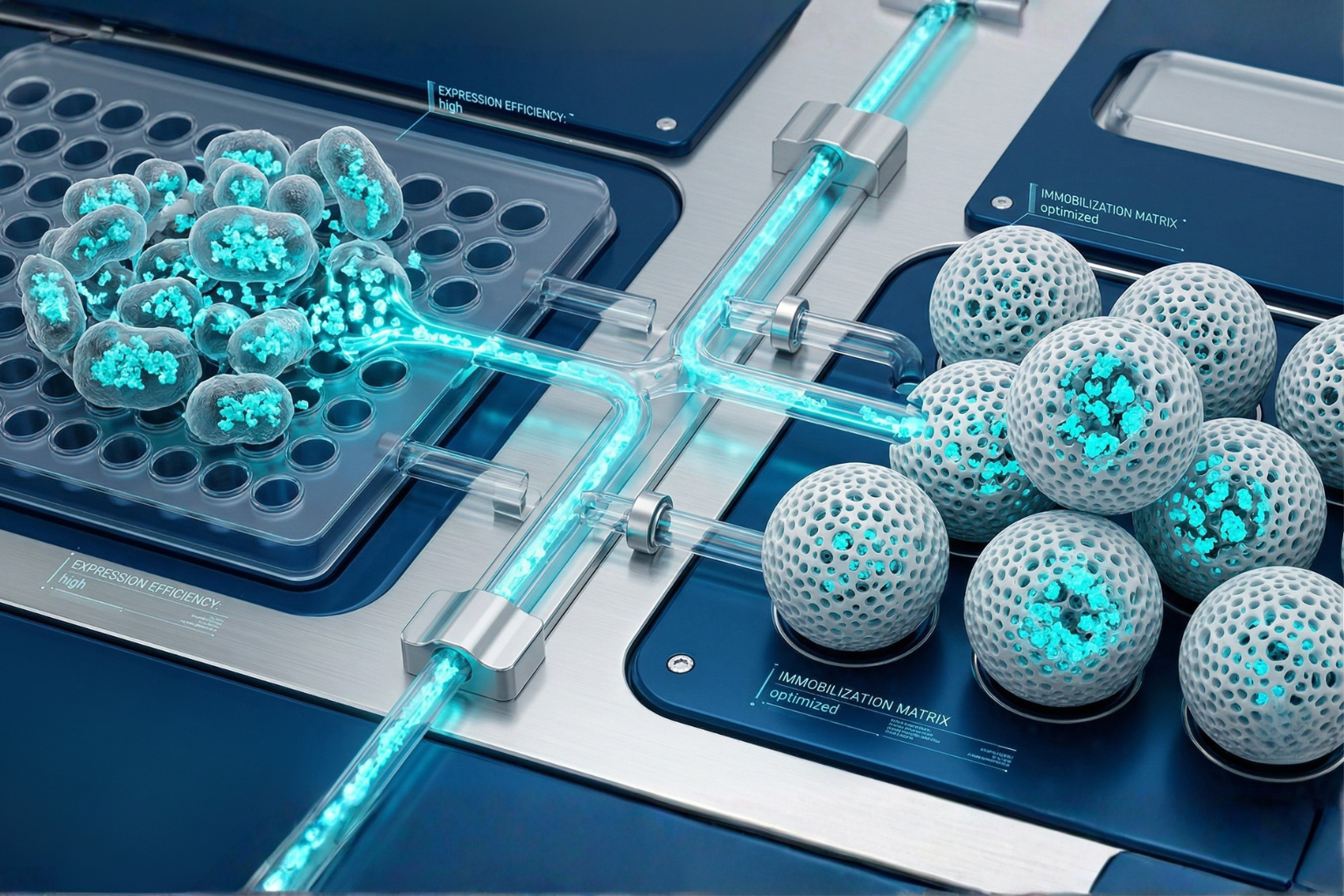
For biotech startups and established industrial facilities alike, scaling immobilized biocatalysts from a benchtop curiosity to a commercially viable process is a massive undertaking. Cell-free biocatalysis relies on enzymes isolated from living organisms – typically microbes – to drive complex chemical transformations under mild conditions. The ultimate success of a biocatalytic reactor hinges on the price and quality the materials used as well as the…
-
Mastering pH Control for Successful Enzyme Immobilization
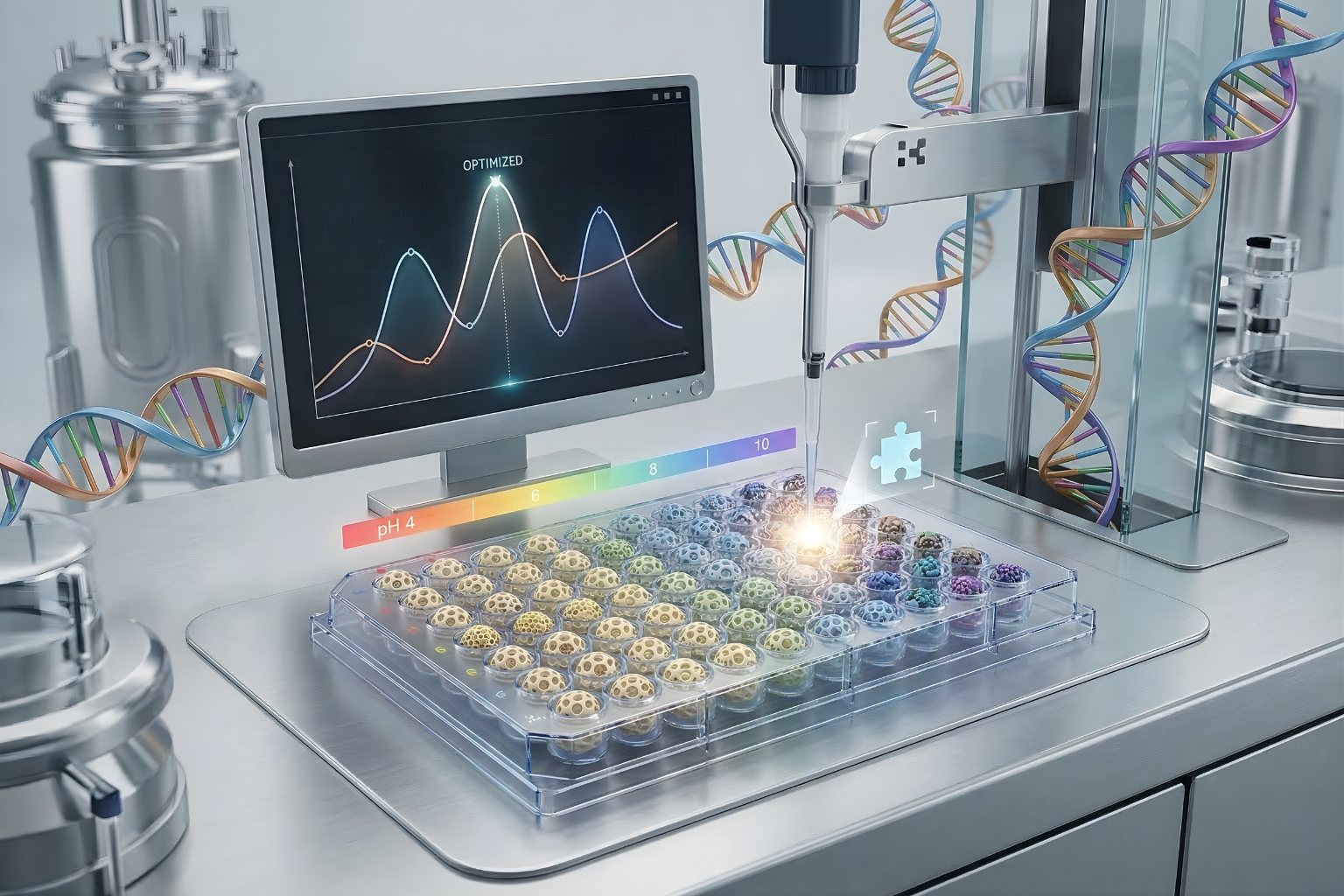
Need Help Controlling Reactor Conditions Such As pH? Talk to a Solidzymes Expert Today. For innovators scaling up a biocatalytic process, it is important to maintain control over the conditions in the enzymatic reactor such as substrate / product concentrations, temperature, and pH. Unanticipated pH changes, in particular, often causes unexpected delays and activity drops during scale-up. While controlling pH in a standard solution is…
-
Choosing the Right Enzyme Immobilization Chemistry: A Strategic Guide for Scalable Biocatalysis
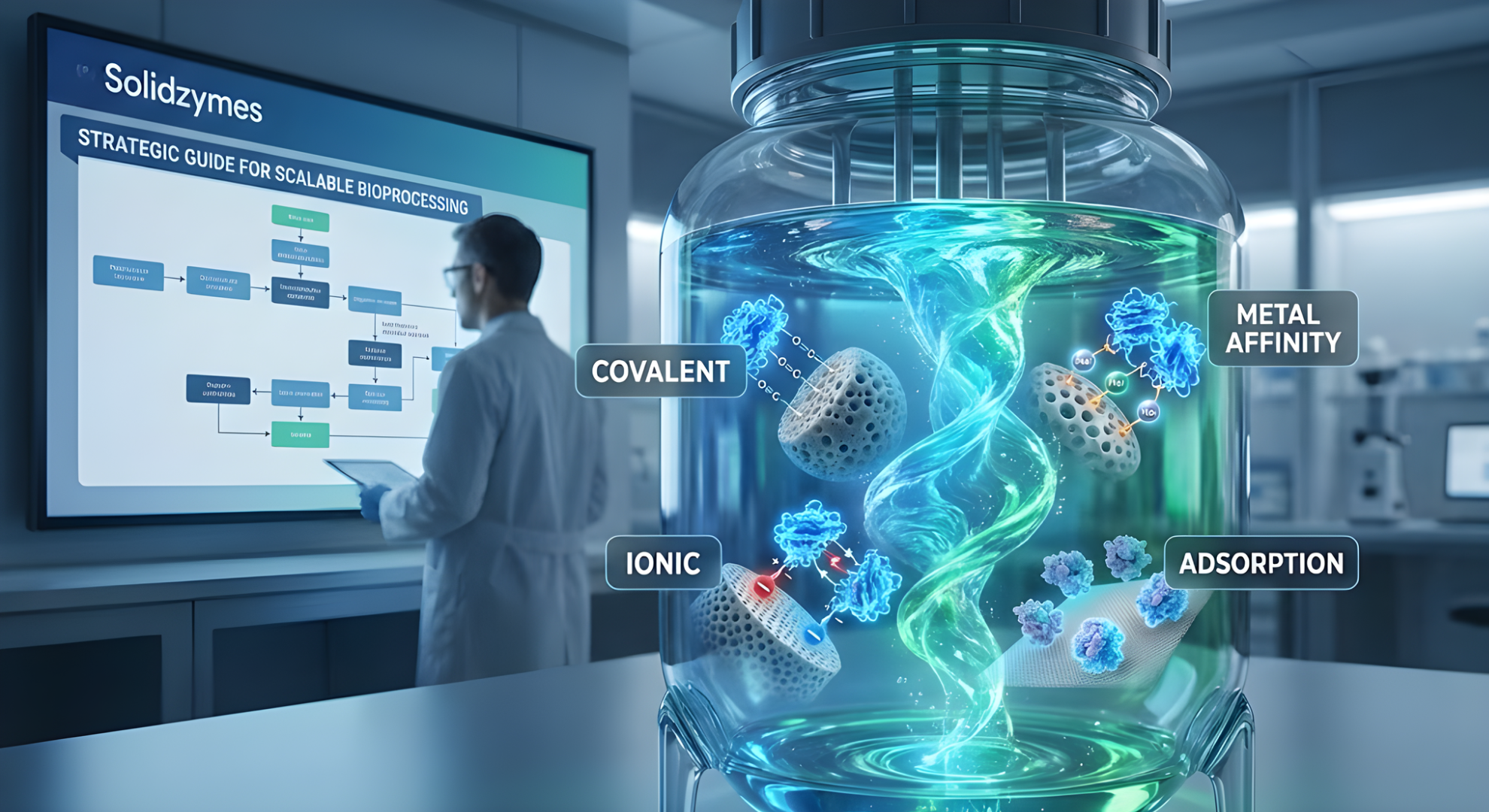
Selecting the correct enzyme immobilization chemistry is critical for process stability and cost. This guide compares covalent, metal affinity, ionic, and adsorption methods to help PIs and Innovators optimize biocatalyst performance for industrial scale-up. 💬 Need help? Talk to a Solidzymes expert today. Introduction: Why Enzyme Immobilization Chemistry Choice is A Crucial Scale-Up Decision In the lab, an enzyme’s activity is the priority. At scale,…
-
Lactase Stabilization with Glutaraldehyde
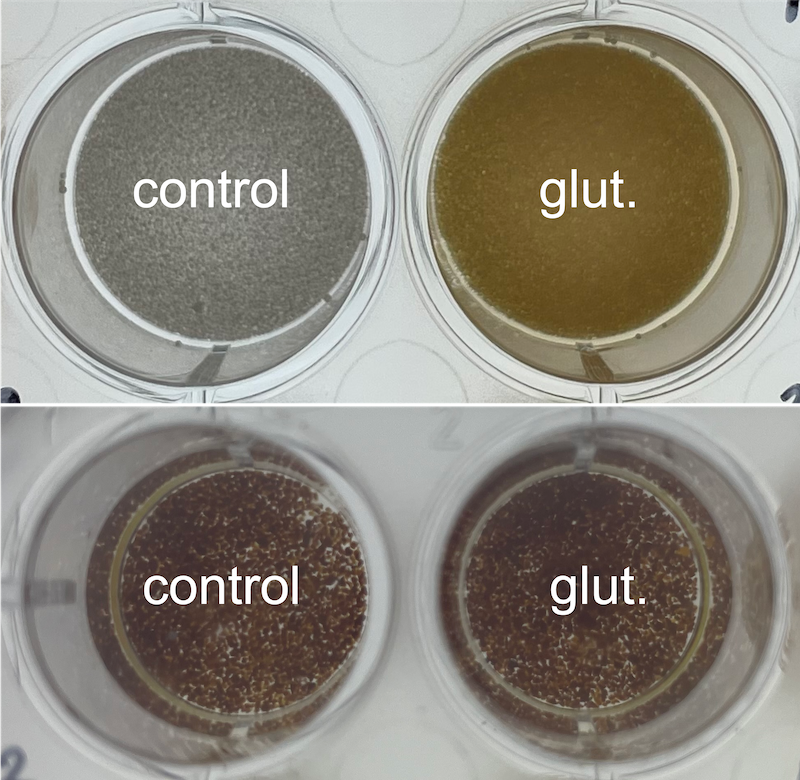
Glutaraldehyde is a well known covalent crosslinker that is often used to improve the enzyme immobilization process by creating covalent attachment points (Rodrigues et al. 2021). It reacts with amine groups on the surface of proteins / particles and in so doing promotes structural integrity of the enzyme by connecting it to the solid support, to neighboring proteins, or to itself. If you are interested…
Insights & Innovations
Here you can read about current events and examples from finished projects.